Vater Und Kleinkind In Den Alpen Verschwunden – Der Fund In Einer Felsspalte Nach Jahren Schockiert
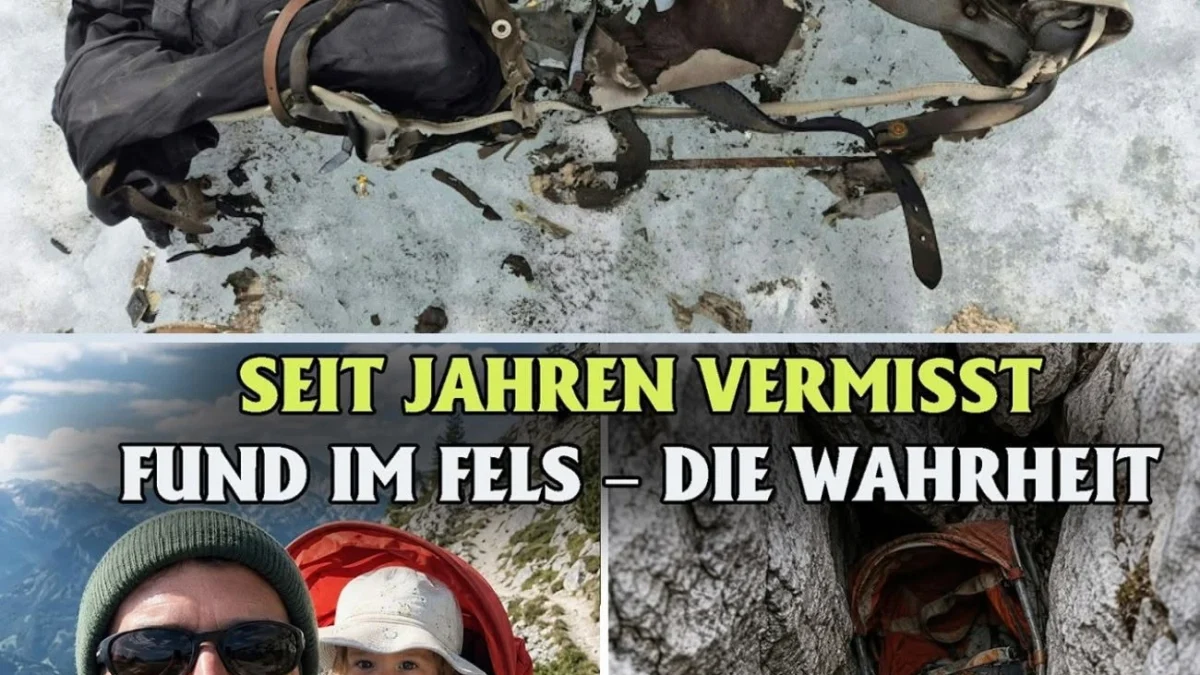
On October 14, 2020, the Berchtesgadener Land police station received a missing person report which initially differed little in its formal structure from other reports, yet carried a particular gravity from the very beginning. The absence of Matthias Krüger, 43 years old, residing in Munich, working as a civilian survival trainer with many years of experience in training emergency and self-defense groups, was reported. His 17-month-old daughter, Hanna Krüger, was also missing. The complaint was filed at 8:12 pm by his wife, Anna Krüger. Anna was 39 years old and employed as a manager at an insurance company in Munich.
Her report was not panicked or unstructured, but rather in the clear, factual form that is expected in Germany when speaking to authorities. She provided names, dates of birth, planned route, and planned return time. The planned end time for the day hike was 6:30 pm. Matthias was already over an hour and a half late at that point.
The initial assessment by the officers was routine. Hikers are delayed. Mobile networks are unreliable in alpine terrain. However, the identity of the missing person led to an immediate reassessment. Matthias Krüger was not a casual hiker, not a tourist with inadequate equipment. He was a trained survival trainer, someone who was considered an expert in risk assessment, orientation and emergency management in Bavaria and beyond. He had conducted training courses for local organizations, co-developed guidelines, and repeatedly emphasized that planning and feedback are the cornerstones of any undertaking in the mountains.
The fact that he, of all people, did not return as announced and made no statement whatsoever, contradicted everything that constituted his professional attitude.
Anna Krüger described how the hike had been planned as a day trip. No overnight luggage, no multi-day route, no risky undertaking. Matthias had clearly stated the goal and had set a binding return time. Little Hanna was to be carried in a professional child carrier, a high-quality model in dark red, specifically designed for longer hikes.
Anna received the last message at 9:47 a.m. A photo showed Matthias with the carrier on his back, Hanna securely fastened inside. The text was concisely worded: “Everything went according to plan. Return as discussed.” That was all it said. No hint of uncertainty, no mention of weather problems, no mention of deviations. After that, the phone remained silent.
Between 6:30 p.m. and 8:12 p.m., Anna tried several times to reach her husband. She was aware of the potential dead zones in the alpine region, but she also knew her husband’s habit of sending a short message at the latest when the delay began.
Even at the initial police reception, the report was recorded under the category of missing person, potentially dangerous situation. Having a small child in tow increased the priority. At the same time, the missing person’s professional competence played a dual role; on the one hand, he was considered capable of handling difficult situations independently.
The officers asked systematic questions: “Had there been any family conflicts? Were there any signs of psychological distress? Financial difficulties? Plans for a fresh start?”
Anna denied all speculation. The marriage had been stable. Matthias was looking forward to the trip. The hike was deliberately planned as a father-daughter day out.
The situation was matter-of-fact, almost like a matter of protocol. Two people, last seen in the morning, planned return in the early evening, no sign of life after 9:47. Around 21:00 the internal coordination with the Bavarian Mountain Rescue Service began. A formal search operation would be prepared, initially under the assumption that a delay or technical problem might be resolved. Nevertheless, the case was not treated as a normal delay. The combination of alpine terrain, autumnal temperatures and a 17-month-old child left no room for negligence.
In the following hours, the last known movement profile was reconstructed. Parking data, mobile phone cells, possible routes. Matthias knew the region well, but did not visit it regularly. His planning was considered thorough, but not reckless. There was no indication of risky experiments or spontaneous deviations.
For Anna, that night marked the beginning of a period of waiting, characterized not by speculation, but by grappling with an irresolvable contradiction. Her husband had been a man of structure, of responsibility. In seminars, he had repeatedly emphasized that the greatest risk in the mountains lay not in the terrain, but in overestimating one’s own infallibility. That’s precisely why his absence was difficult to understand.
The police documented all statements objectively. No hasty conclusions. No public statement. First, an internal assessment was conducted to determine whether a medical emergency was likely. A fall, an acute illness, a technical defect. The possibility of a voluntary disappearance was formally recorded, but not prioritized.
One detail was crucial. The message at 9:47 a.m. contained no indication of unrest. She seemed routine, almost casual. The tone was consistent with Matthias’ usual communication style. That’s precisely what made her worrying in retrospect.
Between this apparent normality and complete radio silence lay an invisible boundary. The assessment changed as the duration of the inaccessibility increased. From a certain point onwards, the assumption was no longer that there was a delay, but rather that there was a dangerous situation.
The fact that an experienced survival trainer did not respond was statistically unusual. The fact that a toddler was involved increased the pressure to act. The internal file noted that particular sensitivity was required when dealing with the family. Public relations work needs to be prepared, but only after consultation with the relatives. The media impact of a missing father with a toddler was predictable.
For the authorities, the structured search phase began. For Anna, the phase of uncertainty began without a point of reference. There was no single event that could be identified as a turning point. No witnesses, no emergency call, no objective signal. The only clear fact is that no further sign of life was received after 9:47 a.m.
Thus, the first day ended not with a result, but with an open file. Two names were written on it: Matthias Krüger, 43 years old. Hannah Krüger, 17 months old. Last confirmed message 9:47. Planned return 18:30. Missing person report 20:12. Then silence began.
Starting the following morning, the case was transformed from a missing person report into a structured operational scenario. The Bavarian Mountain Rescue Service, in coordination with the Berchtesgadener Land Police Inspectorate, took over the operational coordination in the field. At the same time, the Upper Bavaria South Police Headquarters set up an operations center that collected and documented all information.
In Germany, the first 72 hours are considered crucial in missing persons cases, especially when minors are involved. Accordingly, the situation was internally classified as time-critical. Matthias Krüger was no ordinary hiker. The operations management immediately checked his professional qualifications. He held recognized certificates as a mountain guide, had participated in advanced training courses on alpine hazard assessment, and had regularly worked as a speaker for company self-protection programs.

His expertise was not ignored in the evaluation, but rather precisely classified. An experienced professional makes fewer spontaneous mistakes, but can still fall victim to unforeseen circumstances. This ambivalence determined the strategic planning from the very beginning.
The first search phase focused on the officially stated route. All known entry points, parking facilities and routes were systematically checked. Matthias Krüger’s vehicle remained unchanged in the designated parking space. There was no indication of a spontaneous change of location. No abnormalities were found inside the vehicle. Personal documents, spare clothing and unneeded equipment were in their designated places. Nothing indicated a planned deviation from the day trip.
Parallel to the terrain search, the digital trace was analyzed. Matthias’ mobile phone sent the last confirmed data transmission at 9:47 AM. After that, the signal was completely lost. Location tracking via radio waves was no longer possible. Even a later attempt to connect to the network was not registered. The possibility of a technical defect was investigated, but could not be verified without the device.
Rescue helicopters circled over the known sections of the route, while ground teams searched the paths in a grid pattern. In doing so, not only the official hiking trail was taken into account, but also potential detours that could be chosen based on experience.
Matthias Krüger was known for analyzing the terrain with awareness, but without taking unnecessary risks. His previous training records showed that he always prioritized safety over sporting challenges. This fact was factored into the prioritization of possible scenarios.
During the first two days, no evidence of a fall, a slip or an improvised emergency shelter was found. There were also no typical traces that arise from unexpected incidents. No abandoned items, no damaged equipment, no textile remnants. What was particularly striking was the complete absence of any signs of a hectic change of position.
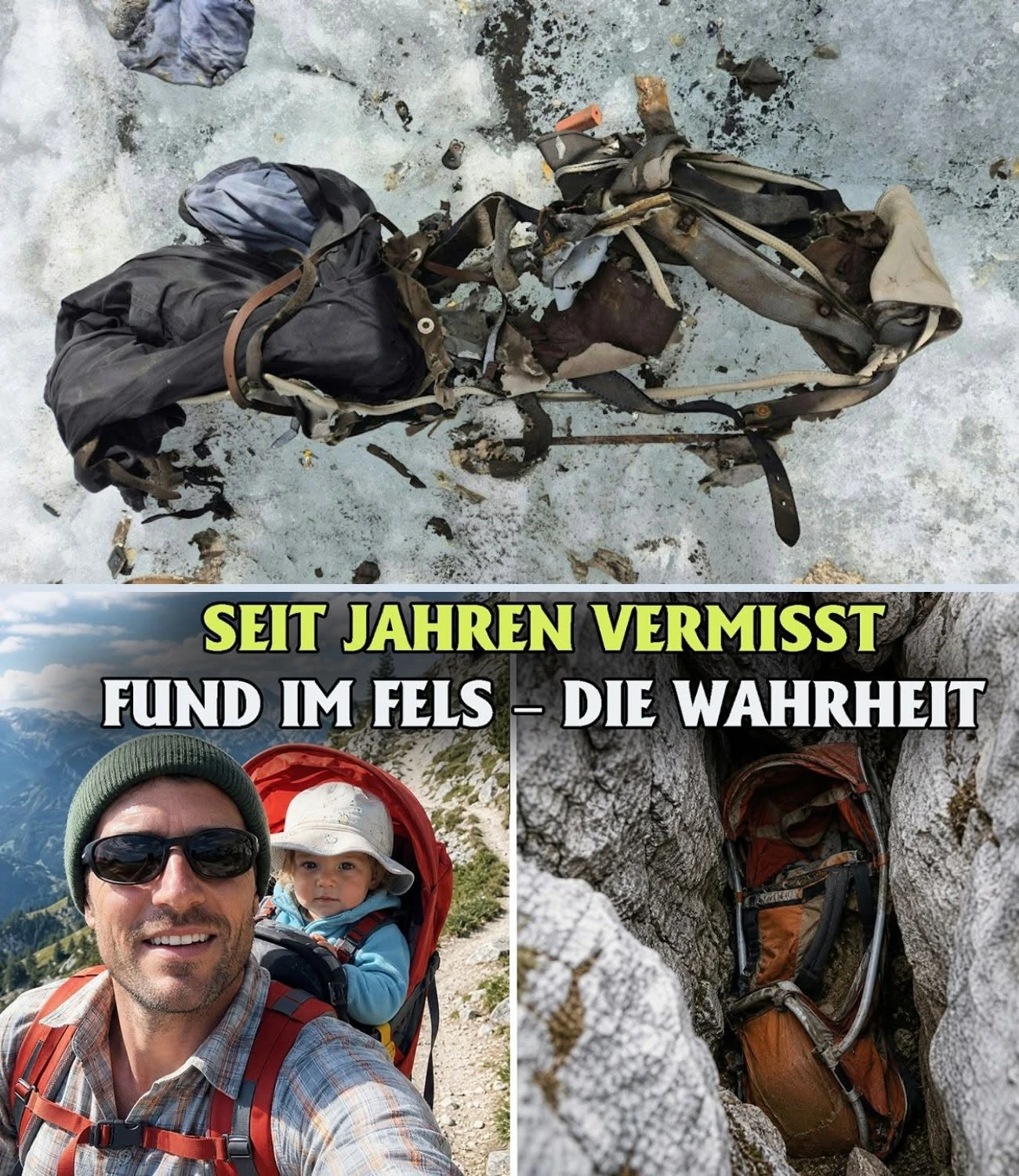
A survival trainer who gets into trouble usually leaves behind structured clues or improvised markers. Nothing of the sort was found.
Investigators also examined medical factors. Were there any pre-existing medical conditions? Cardiovascular risks? Indications of acute stress? The medical record showed no relevant diagnoses. Matthias was athletically active and was considered to be in good health. No starting point was found here either.
The pressure increased with each passing hour. Within the agency, there was discussion about whether the missing person’s expertise posed a risk, because in an emergency he would act independently and might deliberately deviate from the main path. At the same time, his professionalism argued against making an unpredictable change of route without a compelling reason, especially with a small child in a carrier.
On the third day, the search area was expanded. External forces supported the operation. Nevertheless, the result remained unchanged. The documentation still showed no reliable leads.
The command center began systematically recording even unlikely scenarios, including undetected external interference or deliberate disappearance. However, no financial irregularities or private conflicts were found in the latter case. Anna Krüger’s statements were reviewed again and compared with known data. No contradictions were found.
On the fifth day, a search party reported a find. A mechanical compass was discovered in a peripheral area of the extended search field. The device had a damaged glass cover; the needle was blocked. The discovery site was not directly on the indicated route, but in a slightly offset zone, which was nevertheless conceivable within the scope of possible orientation errors. The compass was secured and handed over for examination.
A new working hypothesis was immediately developed. If the mobile phone failed due to lack of network coverage or technical problems, Matthias could have resorted to analog navigation. A mechanical compass as a backup instrument generally fit the profile of a safety-conscious person. The damaged needle could have led to an incorrect direction determination. In conjunction with the difficult terrain, a gradual drift away from the planned route would have been explainable.
The search strategy was adjusted accordingly. New grid zones were defined, resulting from the assumed misorientation. The incident report noted that the theory seemed plausible, but was not confirmed. The investigators were aware that a single item without direct reference would not allow for a definitive conclusion.
While the search was intensified under the new assumption, a materials analysis of the compass was conducted in parallel. The question was whether it could actually be dated to the year 2020 or whether it was an older object that had accidentally been left on the site.
The analysis was handed over to the Institute of Archaeology in Upper Bavaria, as they had expertise in dating mechanical instruments. The expert report was available two weeks after the discovery.
The compass was clearly attributed to the pre-war period. The design, material composition and manufacturing characteristics suggested a production date before the Second World War. A connection to current hikers was unlikely. There was no evidence whatsoever to suggest any use in 2020. The object was most likely a historical relic that had remained in the field for decades.
This result shattered the previously developed theory. The compass had no connection whatsoever to Matthias Krüger. The search zones recalculated on this basis lost their legitimacy. The incident command reverted to the original analysis.
Once again, the question arose as to how an experienced survival trainer could disappear without a trace with a 17-month-old child. Internally, it was noted that the discovery had tied up valuable time. Nevertheless, the review had been absolutely necessary. In a legal process, no plausible lead may be ignored. The disappointment was palpable, but remained professionally assessed.
After the extended search phase had ended, it became clear that despite maximum efforts, no concrete evidence had been obtained. There was neither a confirmed accident nor any tangible external influence. The case existed in a gray area. The investigation file was not closed, but was placed in a phase of reduced activity.
The mountain rescue service ended its widespread operation. Individual patrols remained planned. The public continued to ask for information. For the authorities, the findings were sobering: no traces of violence, no abandoned equipment, no electronic signal, no valid material evidence. The mechanical compass had proven to be a historical artifact. This meant the investigation was back to square one.
The file concluded this phase with a sentence that, in its matter-of-factness, reflected the extent of the uncertainty: “The whereabouts of Matthias Krüger and Hanna Krüger remain unclear.”
With the conclusion of the intensive search phase, the public focus shifted. The formal assessment by the investigating authorities remained reserved, but outside the official records a different dynamic began. Regional media picked up the story. Initially, factual reports about the ongoing measures, the special qualifications of the missing person, and the involvement of the mountain rescue service dominated. However, as time passed without any tangible result, the tone changed.
Commentators raised questions that had been discussed in the command center, but never prioritized. “How likely was it that a survival trainer with proven experience in alpine hazard assessment would simply have an accident without leaving a trace? Was it realistic to assume that all emergency mechanisms had failed? Could such a complete lack of traces really be attributed solely to an accident?”
Scenarios were devised in online forums that went far beyond the official situation assessment. Some voices speculated about the possibility of a voluntary disappearance. The argument followed a sober, albeit speculative, logic. Those who are familiar with nature know how to minimize traces. Those who work as trainers are familiar with search patterns and reaction times. Theoretically, deliberately going underground would be easier for someone with precisely this knowledge.
The police responded to such speculations neither with confirmation nor with a clear denial. Internal statements indicated that all conceivable scenarios would be examined. Voluntary disappearance was assessed as statistically rare, but not impossible. However, there was no objective evidence to support such an assumption. There were no financial irregularities, no unusual account movements, no indications of preparatory actions. Nevertheless, the possibility formally remained on the table.
For Anna Krüger, this shift meant a second level of stress. In addition to the uncertainty about the fate of her husband and daughter, an implicit questioning of the missing person’s integrity arose. Matthias had been publicly perceived as an expert. Now his competence has become the starting point for doubts about his loyalty.
Anna strongly disagreed with these assumptions, but in her own matter-of-fact way. She avoided public emotionalization, but insisted that the image of a voluntary disappearance did not correspond to either his personality or his lifestyle.
Legally, the case remained in an intermediate category. There was no evidence of a homicide, no indication of a specific crime, but also no evidence to support a purely accidental assumption. The investigation was not launched, but instead transferred to a so-called extended observation phase. New leads should continue to be received, even without maintaining a permanent operational structure.
Anna decided to take a formal step at this stage. She requested, pursuant to paragraph 163 of the Code of Criminal Procedure, that supplementary investigative measures be carried out. This request was not an expression of distrust towards the authorities, but a legally legitimate attempt to create transparency and ensure that no avenues of inquiry were overlooked. She also hired a lawyer who requested access to the files and accompanied the official steps.
The review of the files confirmed that all standardized measures had been carried out. Grid search, review of communication data, questioning of possible witnesses in the vicinity of the parking lot, analysis of surveillance cameras in the access area. None of these measures led to a reliable indication. There was no eyewitness who had seen Matthias or Hanna after the morning. There was also no indication of third-party involvement.
The internal memos increasingly addressed the problem of a so-called “unremarkable event”. This term describes situations in which neither the crime scene nor the sequence of events can be clearly identified. Without physical evidence, every hypothesis remains theoretical.
Investigators stated that neither a determination of death nor an explanation for the disappearance was possible. As the uncertainty continued, an administrative state of limbo arose. The case was neither closed nor actively escalating. He was regularly checked, but received no new impulses.
Due to a lack of concrete evidence, the public prosecutor’s office refrained from formally classifying the incident as a homicide. At the same time, no declaration of death was requested, as German law requires a longer period of time or concrete evidence for this.
Media attention decreased. New events overshadowed the reporting. The name Matthias Krüger appeared less frequently. However, the case remained on record in the police archives, categorized as missing person, whereabouts unknown.
For Anna, this situation meant structural isolation. Legally, she was still married. The status under social law remained unclear. Insurance law issues could not be definitively resolved without a determination of death. The bureaucratic consequences of an unexplained disappearance proved to be more complex than those of a confirmed death.
At the same time, the key question remained unanswered: how could a trained survival trainer disappear with a toddler in a region that had been intensively searched? This question hung unspoken in the air, both among the investigators and the public.
The hypothesis of a voluntary disappearance lost its persuasiveness over time, but did not disappear completely. There was no evidence of a new life, no trace of identity, no sightings. In Germany, even a conscious decision to resign leaves administrative traces. Without financial activity, without social security activity, without a digital presence, such a scenario remains speculative.
At the end of the first year, the case was formally reclassified as a long-term missing person case. The investigation file was marked accordingly. New leads were still being investigated, but there was no longer a continuous operational search. For the authorities, this was a pragmatic step. Resources are limited; priorities must be set.
For Anna, it was a symbolic turning point. The transition from acute search to archived uncertainty marked a turning point. Not in the sense of a conclusion, but in the sense of a changed expectation.
The central fact remained unchanged: there was no body. No clear accident site. No third party was considered a suspect. No technical defect could be proven. The compass had proven irrelevant. The mobile phone remained missing. The child carrier had not been found.
In an internal summary, investigators stated that all previous measures had failed to provide a reliable reconstruction of the sequence of events. The whereabouts of Matthias Krüger and Hanna Krüger remain unclear. Further steps would depend on newly received information.
Thus, the situation shifted from an acute crisis to a permanent administrative state. It was not resolved, but it was also not actively progressing. It existed as an open file, an unresolved question in a system that relies on evidence. To outsiders, the case became a story. For the authorities, he remained a statistical number. For Anna, it remained a reality without a conclusion.
In June 2024, the Rosenheim police station received a formal notification from the University of Regensburg. Two research associates from the Institute of Geosciences had documented changes in limestone formations as part of an approved research project. The study area was located in a secondary area, outside the usual tourist routes and therefore also outside the original search grid from 2020.
During their data collection, the researchers identified an object in a raised rock niche that stood out clearly in color from the surrounding rock. Upon closer inspection, it turned out to be a child carrier. The model was a dark red color, structurally stable, and largely intact despite external wear and tear. The position suggested that the object had gone unnoticed for a considerable amount of time.
The scientists acted in accordance with the legal requirements for artifacts found in protected areas. They documented the coordinates, took photographs, and informed the relevant authority. On the same day, the stretcher was secured by emergency services and taken to Rosenheim for further examination.
The initial assessment took place in a separate room, adhering to safety standards. The object was cataloged, sealed, and provisionally classified as a potential piece of evidence. The carrier showed signs of wear and tear, but no immediate signs of violent impact. It was noticeable that, despite the passage of years, the material did not appear to be weathered to the extent that would have been expected with continuous exposure.
The responsible case officer, Chief Detective Tobias Lena, was immediately called in. Lena had been involved in the initial search phase in 2020 as a young investigator. At that time, he had processed the digital documentation of Matthias Krüger’s last known equipment. As he examined the sealed piece of evidence, he instinctively referred to the archived photographs contained in the electronic investigation file.
The comparison was carried out systematically. Color spectrum, manufacturer’s logo, specific seams in the upper frame area, serial number on the lower carrying frame. After a brief examination, it was clear that this was the identical model that had been seen in the photo from October 14, 2020 at 9:47 a.m. The match was not only probable, but unequivocal.
Lena immediately initiated a formal reassessment of the case. According to the internal guidelines of the Bavarian State Criminal Police Office, the discovery of a relevant object in a long-term missing person case means the reactivation of the investigation. The case was moved from the observation phase to an active investigation. The labeling in the system changed accordingly.
The reopening took place under the designation “investigation proceedings – renewed clarification of the facts”. The public prosecutor’s office was informed at the same time. Legally, the case was still not classified as a homicide, but the new piece of evidence required a comprehensive reassessment.
The fact that the child carrier was found in an area that had not been systematically searched in 2020 was a key factor. At that time, the search had focused on the reported route and the immediately adjacent zones. The rock niche that has now been identified lay outside these defined areas. In the 2020 operational documentation, this section was classified as topographically difficult and therefore with low priority.
The discovery changed the perspective. The object was not a random item. It was personalized equipment that could be clearly attributed to the missing person. This meant that for the first time in four years, there was physical evidence directly related to Matthias Krüger and his daughter.
Parallel to the formal reactivation, the forensic investigation began. The stretcher was opened under laboratory conditions. Samples of fabric fibers, closures and metallic components were taken. The question was not only whether it was the right model, but also about possible traces, biological residues, foreign particles, sediments, and organic material.
Investigators noted that the location where the body was found could not be defined as the immediate scene of the crime or accident. Rather, it must be examined whether the object was originally placed there or was brought there later. This differentiation was crucial for the further evaluation.
For Anna Krüger, the news meant a renewed confrontation with the case. She was informed by the police that same evening. The communication was factual, without any preconceived interpretations. It was explicitly emphasized that while the discovery was significant, it did not yet provide any information about the whereabouts of the missing persons.
A new dynamic emerged within the investigation team. The case was no longer an archived matter, but once again the subject of active analysis. Tobias Lena took over operational management. His advantage lay in his knowledge of the original documentation. He knew which hypotheses had already been tested and which assumptions had proven untenable.
An initial internal assessment revealed several key questions. “Why was the stretcher found in this specific location? Had she become aware of it there? Had a natural process transported them there? Was the location where the body was found identical to the last known location or merely an intermediate point?”
The geographical deviation from the original search grid was a significant factor. It indicated either a change of direction during the migration or a subsequent relocation of the object. Both possibilities had to be examined.
The investigation was formally renumbered, but remained linked to the original file in terms of content. Internal communications emphasized a reluctance to respond to media inquiries. A public statement should only be issued once initial forensic results are available.
With the reactivation of the procedure, the legal assessment also changed. The case was no longer solely a matter of a missing person report, but rather involved a potential criminal offense. As long as it was unclear how the object had reached the site of discovery, external influence also had to be taken into account.
The investigators worked in a structured manner. No speculation, no hasty conclusions. The child carrier was a fact. Their presence in a previously unsearched location was also a fact. Everything else had to be supported by analysis.
After four years of silence, the case had transformed from an administratively dormant matter into an active investigation. The name Matthias Krüger appeared again in the operational logs. And for the first time since October 2020, there was a material point of reference that went beyond mere speculation.
After being seized, the child carrier was transferred to the Bavarian State Criminal Police Office in Munich under strict evidentiary requirements. The forensic investigation unit then took over the analysis. The aim was not only to confirm the identity of the object, but above all to reconstruct its material history. In cases without eyewitnesses or direct evidence, scientific evaluation becomes particularly important. The object itself should provide information about the past four years.
The investigation began with complete photographic documentation. Samples were then taken from various areas: outer fabric, carrying straps, padding, metal frame, fasteners, seams. Each sample was cataloged separately and analyzed under controlled conditions. The question was precisely formulated: “Did the condition of the materials correspond to continuous exposure to weathering over a period of four years?”
The initial results concerned the synthetic fibers of the outer material. The red fabric was made of high-strength nylon with UV stabilizers, as is common in high-quality outdoor products. However, the spectrometer revealed an unexpected picture. The molecular structure of the color pigments was not degraded to the extent that would have been expected after four years of unprotected sun exposure. Comparison samples from the same production period, which had been artificially aged under laboratory conditions, showed significantly greater changes.
The UV analysis revealed a level of exposure that statistically corresponded to several months of direct exposure, but not several years. The result was clearly documented and verified multiple times. The dyes had faded slightly, but not to the extent that continuous exposure to the elements would have caused.
The next step involved examining the padding of the stretcher. The material consisted of closed-cell foam, which shows structural changes under long-term exposure to moisture. Typical signs would be microbial infestation, odor formation, decomposition or hardening. However, the samples showed no such traces. The cell structure was largely stable. No significant colonies of mold or bacteria were found, as would be expected after years of exposure to precipitation and temperature fluctuations.
The metal components were also tested. There were slight signs of corrosion, but to a moderate extent. Continuous weathering over four winters would have resulted in significantly stronger oxidation processes. Instead, the condition corresponded to a temporary impact.
Additionally, sediment particles that had accumulated in seams and folds were analyzed. The composition showed a mixture of mineral components that were typical for the immediate environment where the find was made. However, no layering or depositional patterns were found that would have indicated several years of storage at exactly this location.
Following the completion of the first phase of the investigation, the laboratory formulated a preliminary assessment that the material condition of the child carrier was not compatible with continuous exposure over the entire period from October 2020 to June 2024. Rather, the totality of the findings suggested that the object had been stored in a protected, dry, and largely light-free environment for a significant part of this time.
This assessment had significant consequences. If the stretcher had not lain unprotected in the field for four years, it must have been in a different location in the meantime. The central question thus shifted from the original assumption of an immediate accident site to the possibility of a later transport.
The investigation team, led by Tobias Lena, then examined external factors that could explain the relocation. Initially, the option of deliberate placement by a third person was considered. At the same time, natural displacement due to environmental influences also had to be analyzed.
For this purpose, meteorological data from recent years were evaluated. The German Weather Service provided detailed records for the region. Particular attention was paid to exceptional rainfall events, landslides, or local flooding.
The analysis revealed that a heavy rainfall event had been recorded in February 2024, which was classified as exceptional in the region. Within a few hours, an amount of precipitation had fallen that was statistically considered a rare extreme event. Temporary flash floods had been documented in several side valleys. Forestry offices subsequently reported displaced debris and newly formed sediment deposits.
The investigators combined this data with the geological findings of the University of Regensburg. The location where the stretcher was found was in an area that was hydrologically connected to a higher-lying catchment area. Simulations showed that, based on this, a new working hypothesis emerged. The child carrier had been kept in a different, protected location for years. It was only the heavy rain event in February 2024 that dislodged them from this hiding place and transported them towards the later discovery site.
This assumption was consistent with the forensic findings. She explained the limited UV exposure as well as the moderate degree of corrosion and the absence of long-term moisture damage. At the same time, however, she raised new questions. If the stretcher had been stored in a protected place for years, where was this place located? Was it a natural formation, such as a rock niche or cave? Or was human intervention involved?
Lena had the hydrological model developed in detail. The calculations showed that the transport route of the stretcher most likely originated from a higher-lying area that had not yet been intensively investigated. The original search area from 2020 did not fully cover this section, as it was considered unlikely at the time.
Investigators noted in an internal memo that the discovery of the stretcher should not be viewed as an isolated event, but rather as an indicator of a previously unrecognized spatial component of the case. The question was no longer solely why Matthias Krüger had disappeared, but also where his equipment had been for years.
The new hypothesis did not signify a conclusion, but rather a renewed shift in focus. Instead of a simple accident scenario, a more complex situation arose in which temporal and spatial factors had to be reassessed. The material condition of the child carrier had refuted previous assumptions and at the same time opened up a new avenue for investigation.
The file was amended accordingly. Under the heading of forensic assessment, it was noted that the storage of the evidence in a protected environment for an extended period of time was considered likely. The possibility of natural displacement through heavy rainfall in February 2024 was classified as plausible, but not yet conclusively proven.
This made it clear that the discovery of the stretcher did not represent the end of a search, but rather the beginning of a new phase. The scientific findings had called into question a central assumption of the last four years. And they had shown that the disappearance of Matthias and Hanna Krüger could not be explained solely by chance or direct exposure to the elements.
The hydrological modeling was further refined in close coordination with the State Office for the Environment. The simulations took into account rainfall intensity, terrain slope, soil composition, and known drainage channels. After several runs, a consistent picture emerged. The most likely source for the transport of the child carrier was in a steeply sloping catchment area above the later discovery site.
This area was not systematically searched in 2020 because it was outside the priority zones at that time. Tobias Lena initiated the formation of a specialized task force. Unlike in the first search phase, a large-scale grid should not be used this time. Instead, a targeted search was conducted for possible protected storage locations from which an object could have been released by heavy rain.
The operational management was the responsibility of the criminal police in cooperation with the mountain rescue service and forensic experts. The newly defined search area was topographically challenging, but clearly limited. The deployment planning was done objectively and based on data. The aim was to identify potential natural shelters, rock niches, or protected depressions where an object could have been located for years.
On the third day of the operation, a team reported an anomaly. A human skeleton was discovered in an elevated rock opening that was not immediately visible due to its location.
The incident command immediately ordered the area to be secured. The location was classified by forensic experts as a potential site where a body was found. All further measures were taken in accordance with the standards of a possible death investigation procedure.
The skeleton was largely complete. It was located inside the rock opening and showed no immediate signs of external tampering. Textile remnants and fragments of a backpack frame were found in the immediate vicinity. An initial assessment by the forensic pathologist revealed that the bone structure had remained undisturbed for several years.
The recovery was carried out in compliance with all forensic regulations. Bones, textile fragments and metallic components were individually documented and sealed. The discovery was reported to the public prosecutor’s office on the same day. The procedure was officially given the additional title of “finding mortal remains”.
The identification was achieved through a combination of dental comparison and subsequent DNA analysis. Matthias Krüger’s dental data had already been secured in the original procedure. The comparison revealed a clear match. Subsequent molecular genetic testing confirmed this result beyond doubt. These were the mortal remains of Matthias Krüger.
This finding changed the legal classification of the case once again. The missing person status was transferred to a death investigation procedure. At the same time, the question of the cause of death arose.
The forensic examination focused on the bone structure, as soft tissues were no longer present. The analysis revealed multiple fractures in the pelvic and right limb regions. The reconstruction of the possible sequence of events was based on the injury patterns. The forensic medical assessment was that Matthias Krüger had most likely suffered a fall that resulted in serious injuries to his hip and leg area. Such injuries can significantly restrict independent movement. Given the alpine environment and the lack of immediate help, a fatal outcome is plausible.
Within the investigation team, there was initially a cautious sense of relief. The skeleton confirmed at least part of the hypothesis that it may have been an accident. For four years there had been no physical certainty. Now a concrete finding was available.
But the question about Hanna remained unanswered. No evidence of the presence of a small child was found in the rock opening. Neither bone remains nor textile fragments of the children’s clothing nor components of the child carrier were found there. This fact contradicted the assumption that both had been involved in the accident together.
The forensic search of the immediate surroundings was intensified. Each layer of sediment within the rock opening was sifted and documented. During the inspection, a technician came across a metallic object in the area near the entrance.
At first, it appeared to be an ordinary tool fragment. However, after careful uncovering, a complete object was revealed. It was a handmade digging tool with a curved blade, similar to a hoe. The wooden handle was wrapped with black insulating tape. The tool didn’t look like part of modern hiking equipment. Its design was more like simple, robust tools used in collecting or digging up roots.
The find was immediately secured and packaged separately. The initial assessment revealed that this tool was in no way related to the known equipment of Matthias Krüger. His documented packing list from 2020 did not include such an item. Previous training materials also provided no indication that he carried such tools on hikes.
The discovery fundamentally changed the situation. Up to that point, the event could have been presented as a plausible accident. Collapse, serious injuries, no timely emergency call. However, the appearance of a foreign tool in the immediate vicinity of the mortal remains raised a new question: “Who had brought this object there?”
Investigators noted that the tool could not have appeared by chance in a remote rock opening without the involvement of a human actor. Even if Matthias had carried it himself, it would have had to appear in his equipment documentation. This possibility seemed unlikely given his systematic preparation.
The hypothesis of an isolated accident event thus lost its exclusivity. Although the injuries were consistent with a fall, the presence of a foreign object at least implied the possible presence of another person in the area.
Lena ordered an extended forensic investigation. The tool was examined for biological residues, as well as for possible fingerprints or fibers. Given the past four years, no usable evidence was to be expected, but all options had to be examined.
The incident file has been updated again. In addition to the cause of death, likely a fall from a height, a new note appeared, indicating a possible third party due to a tool found at the scene, thus shifting the focus once again.
The identification of Matthias Krüger brought certainty about his fate, but it did not solve the central mystery. Hannah Krüger was still missing. And the tool in the floor of the rock opening represented a new unknown that did not fit the picture of a purely accidental event.
The discovery of the mortal remains did not conclude the case, but rather brought it to a new, more complex dimension. The tool recovered from the rock opening was examined by forensic experts immediately after its retrieval. It was a handmade digging blade with a short, curved cutting edge, such as is typically used when digging up roots. The handle was made of wood and wrapped in a striking pattern with black insulating tape. The winding was not random, but rather evenly applied and executed at a specific angle that differed significantly from commercially available repair windings.
The forensic investigation confirmed that the tool had been lying in the ground for an extended period of time. Biological traces were largely destroyed by weathering. Fingerprints could not be secured. Nevertheless, the object remained of considerable importance as material evidence, since it was not part of Matthias Krüger’s documented equipment.
The investigation team, led by Tobias Lena, conducted a systematic comparative analysis. First, it was checked whether the tool corresponded to a commercially available model. The result was negative. It was a modified design, presumably adapted by hand. The type of handle wrapping, in particular, was classified as a potentially identifying characteristic. In criminal investigations, such individual changes are considered so-called habitual patterns. People who regularly perform certain tasks develop characteristic methods for handling tools.
Lena therefore had the files on environmental violations in the Berchtesgaden region reviewed. The focus was on proceedings concerning the illegal removal of protected plants or roots from nature reserves. One entry from 2019 stood out. At that time, a married couple had been warned for the unauthorized removal of protected plant species. Their names were Erik Hoffmann and Sabine Hoffmann.
The file contained photos of the equipment seized during the inspection. Among the documented items was a digging tool with a striking handle wrapping made of black insulating tape, which appeared almost identical in shape and wrapping technique. The measure taken at that time only resulted in a report of a minor offense. No criminal proceedings were initiated, as the quantity of plants removed was considered to be small. Nevertheless, the tool had been photographically documented.
The comparison with the object that has now been found revealed a high degree of similarity in terms of construction, material and winding technique. Lena initiated a renewed review of the administrative files. The personal details of Erik Hoffmann, born in 1984, and Sabine Hoffmann, born in 1986, were fully recorded. Both had their residence at the time in the district of Berchtesgadener Land. No further anomalies were documented in 2020 and 2021.
A query in the residents’ register revealed that the couple had moved their residence to Thuringia in the spring of 2021. The new address given was a small town in the Saalfeld-Rudolstadt district. The change of registration was carried out correctly. There were no criminal records.
As part of the extended examination, questions were also asked about family circumstances. According to the residents’ registration office, a minor girl, aged about five to six, lived in the Hoffmanns’ household. The child’s age was particularly striking in the investigation documents. Hanna Krüger was 17 months old in October 2020. In 2024, her age should have been around five to six years. This temporal coincidence was not conclusive, but striking enough to justify a more in-depth examination.
Lena had the connection between the found tool and the Hoffmann couple officially included in the investigation file. This significantly changed the legal assessment. Until now, the death of Matthias Krüger had been classified as a likely accident. With the discovery of a tool that could be attributed to a person who had demonstrably been operating illegally in the same area, the possibility of third-party involvement had to be seriously examined.
The public prosecutor’s office was informed again. Based on the new facts, the offense of failure to render assistance pursuant to paragraph 323 of the German Criminal Code was included in the legal review. If it can be proven that another person found Matthias after his fall and did not offer any assistance, this would constitute a criminal offense. At the same time, suspicions arose of a possible abduction of a minor. Even though there was no evidence of an abduction so far, the presence of a foreign tool in the immediate vicinity of the remains, combined with the disappearance of a toddler, had to be thoroughly investigated.
The investigators deliberately refrained from taking premature measures. A covert intelligence gathering operation was initially ordered. The goal was to avoid alarming the Hoffmann couple through premature measures. The registration data was checked, as were the child’s school and kindergarten registrations. It should be clarified how long the girl had been living in the household and under what circumstances she had been registered.
The documentation revealed that the child was officially registered as the daughter of Erik and Sabine Hoffmann. Birth certificates were on file. These documents now had to be checked for authenticity. An initial review suggested that the registration had been made retroactively. Details concerning the birth showed inconsistencies that required closer analysis.
The direction of the investigation had thus fundamentally shifted. The case could no longer be viewed solely as an accidental death. Rather, the issue now centered on potential criminal offenses, including both failure to provide assistance and possible abduction of a child.
Internally, it was noted that the close temporal proximity between the warning issued to the Hoffmann couple in 2019 and the disappearance of Matthias Krüger in October 2020 was of particular relevance. Although there was no direct proof of an encounter, the geographical overlap was objectively given.
Lena stated in his memo that the combination of the tool find, the identified match with a known group of people, and the existence of a child of the same age in the household of these people constituted a sufficient basis for further investigation. The case was therefore officially classified as a suspected crime related to the Krüger missing person case.
This decision ended the phase in which the death of Matthias Krüger could be viewed as an isolated accident. The investigation took a new direction. And for the first time in four years, alongside the question of how the death occurred, another question arose: “Who else had been at that place when Matthias fell, and what happened to Hanna afterwards?”
The decision to officially question Erik and Sabine Hoffmann was made after consultation with the Munich I Public Prosecutor’s Office. Based on the circumstances, an investigation was initiated on suspicion of failure to render assistance pursuant to Section 323 of the German Criminal Code (StGB) and for possible offenses related to the abduction of a minor. The interrogation should not begin in a confrontational manner, but should first serve to clarify the actual events.
The investigators traveled to Thuringia and conducted the initial questioning in the presence of the responsible police department. Erich Hoffmann initially appeared reserved. Sabine Hoffmann seemed tense. Both denied direct involvement in any violent incident.
The situation changed when the seized digging tool was presented. They were familiar with the characteristic wrapping on the handle. A factual confrontation with the forensic results and the hydrological analyses finally led to a confession.
According to their account, Erich and Sabine Hoffmann were in the area of the later discovery site in October 2020. They had illegally collected roots there, as they had already done in 2019. This was a repeated violation of nature conservation regulations. During their work, they heard noises that they initially could not identify. A short time later, they found Matthias Krüger at the foot of a rock formation. He was seriously injured. His mobility was severely restricted. The toddler was unharmed but without supplies in the immediate vicinity.
According to the Hoffmanns, Matthias was in a state of acute weakness. They would have recognized that a serious injury had occurred. However, they would not have called emergency services at that moment. Their explanation was that they had acted out of fear of criminal consequences. They were aware that they were illegally in the protected area. They feared that if emergency services were called, they themselves would be held responsible.
Instead of getting help, they took the child with them. Initially, she said, she assumed she would hand it over to a public institution in the short term. However, this step has not been taken. In the following days, the initial temporary solution became a permanent decision. They would have given the child a new name and passed it off as their own. Contact with the authorities was avoided. They had left the original child carrier behind; later it was moved by natural forces.
The investigators meticulously examined this account. The forensic findings on Matthias Krüger’s skeleton supported the assumption of a fall. No evidence of direct violence by third parties was found. At the same time, it was undeniable that the Hoffmanns should have provided assistance or at least informed rescue services. Failure to perform such an act constitutes the offense defined in paragraph 323 of the German Criminal Code.
At the same time, the identity of the child living in the Hoffmanns’ household was verified. A DNA analysis was carried out under court order. The result confirmed with a high degree of probability that the girl, who was registered under the name Marie Hoffmann, was biologically related to Anna Krüger. It was undoubtedly Hanna Krüger.
This finding brought a legal clarity to the case that had been lacking for four years. The public prosecutor’s office filed charges against Erik and Sabine Hoffmann for failure to render assistance and for abduction of minors. The proceedings were opened before the Munich Regional Court, as that was the original residence of the Krüger family.
The legal proceedings focused on the actual events and their legal classification. The court determined that Matthias Krüger had been seriously injured as a result of a fall. Whether a timely emergency call could have saved his life could not be determined with absolute medical certainty. Nevertheless, the obligation to provide assistance was clear. Failure to provide this assistance is a grave matter.
With regard to the child, it was determined that the Hoffmanns had not abducted Hanna by force, but had taken her in from a situation in which she was effectively left alone. Nevertheless, the persistent withholding of information from the mother constituted a criminal offense. The Hoffmanns had deliberately chosen not to inform the authorities. They had altered the child’s identity and concealed its origins.
The youth welfare office was also involved during the proceedings. Hanna was initially placed in the care of youth services to enable a gradual reintegration into her family of origin. Psychological assessments confirmed that the child had no conscious memories of the time before 2020. For her, Erik and Sabine Hoffmann had been trusted caregivers.
The reunion between Anna Krüger and her daughter took place under professional supervision. It was not an emotionally charged event, but a carefully structured process. For Anna, her daughter’s return meant both relief and a new challenge. The legal resolution could not replace the lost years.
The verdict was nuanced. The court acknowledged that the Hoffmanns had acted in an exceptional situation, but emphasized the clear violation of their legal duty to provide assistance. The failure to alert emergency services was a serious breach of social responsibility. Furthermore, the unlawful retention of the child was subject to criminal penalties.
The case was formally closed with the verdict. The investigation file received the legally binding decision on the case. For the justice system, this brought a complex process to an end. For those involved, however, a different chapter began.
Anna Krüger faced the challenge of building a relationship with a child she knew biologically, but had to get to know emotionally all over again. Hannah was 5 years old. Her identity had been shaped by the past four years. Integration into the original environment required patience, professional support, and time.
The case had a lasting impact on the region. He demonstrated that even in a highly organized constitutional state, decisions made out of fear can have far-reaching consequences. Erik and Sabine Hoffmann did not act out of criminal intent, but out of fear of the consequences. However, this fear led to a violation of fundamental principles of coexistence.
In its final assessment, the public prosecutor’s office stated that the case exemplifies how important the duty to provide assistance is in the German legal system. “Whoever recognizes an emergency situation bears responsibility. Silence does not protect against guilt.”
The file has been archived. It documents not only a tragic accident, but also the consequences of a failure to make a decision. In a state governed by the rule of law, coexistence is based on trust and the certainty that help will be provided in an emergency. When this certainty is abandoned out of fear, damage occurs that extends far beyond the immediate moment.
Matthias Krüger could not be saved. Hannah Krüger is alive. Her story is part of a legal documentary, but also a subtle indication that responsibility is not negotiable on a case-by-case basis. The courage to take the right action can change lives. The lack of this courage can do the same.
You Might Also Enjoy

Dieses Familienporträt aus dem Jahr 1903 wirkt friedlich – bis man sieht, was sich im Spiegel spiegelt.

„Geh weiter, du fette Kuh!“ – Der milliardenschwere Firmenchef hörte, wie ein Kellner seine Ehefrau beleidigte …